
★★★★★
"The HG-39 classical was perfect for my daughter's first year. Soft nylon strings and a gig bag that actually fits in the car."
Lena M.
Austin, TX · HG-39
Parents, teachers, and first-time players share what worked — sizing, bundles, ukuleles, and the stands that kept instruments in sight.
These notes focus on beginner life: soft nylon strings, student sizes, and whether the tuner actually got used.
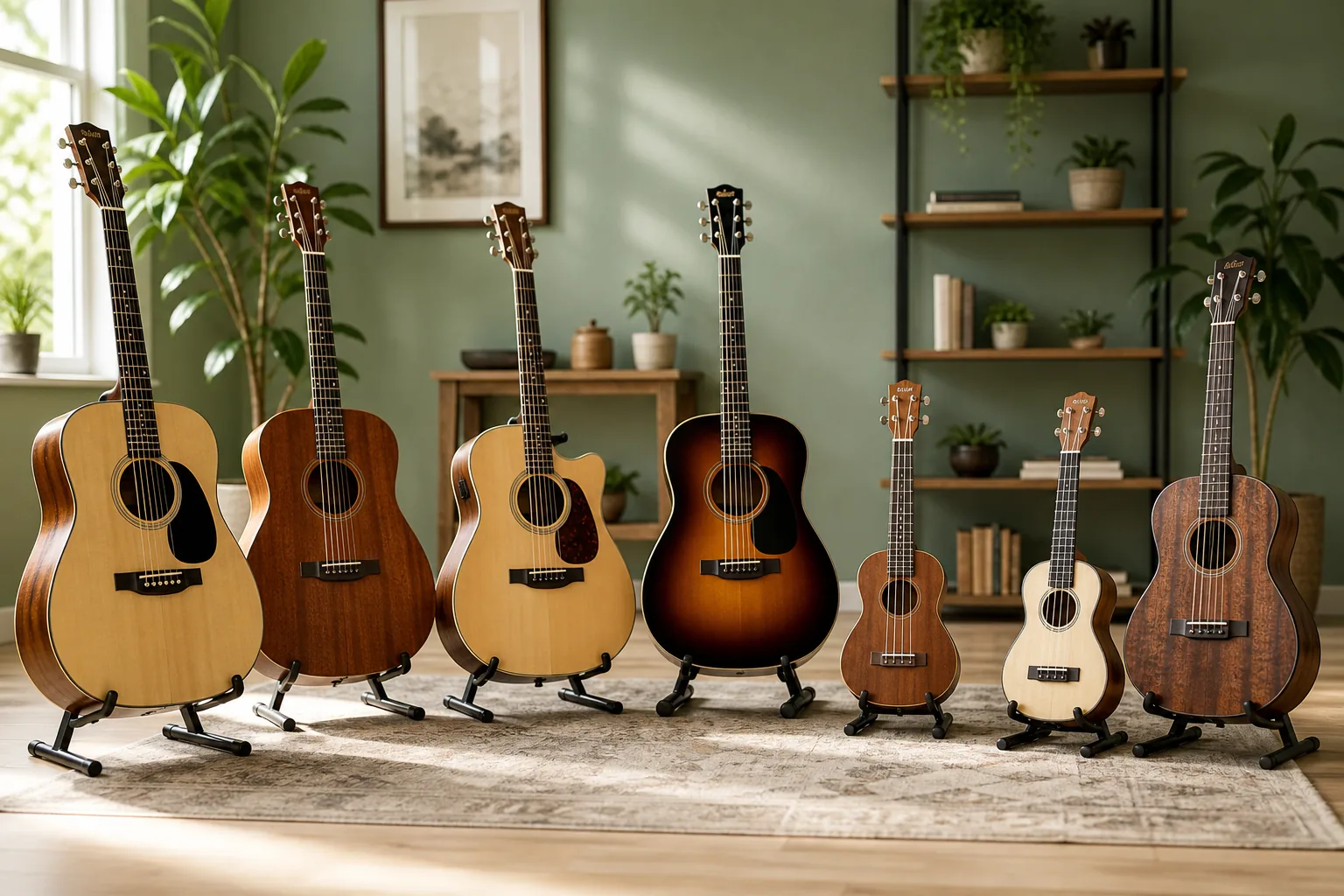
Review cards
"The HG-39 classical was perfect for my daughter's first year. Soft nylon strings and a gig bag that actually fits in the car."
Lena M.
Austin, TX · HG-39
"Bought the HG-36 bundle for my 10-year-old. Tuner and strap meant we started lessons the same week."
Jordan P.
Columbus, OH · HG-36
"Adult beginner here. The dreadnought HG-41 feels solid for strumming without emptying my wallet."
Sam R.
Portland, OR · HG-41
"We added a floor stand after week one. Seeing the guitar by the couch doubled practice nights."
Ava T.
Denver, CO · Stand
"Concert ukulele first, classical later. My son needed quick wins; four strings delivered them."
Marcus W.
Atlanta, GA · Ukulele
"Travel acoustic is quieter than a full dreadnought — perfect for apartment evenings. Action was fine after a light setup."
Nina K.
Chicago, IL · Travel
"Music teacher tip: HG-34 for smaller third graders, HG-36 for most fourth and fifth. Nylon keeps morale high."
Rita S.
Phoenix, AZ · Teacher
"Dual stand holds my HG-41 and my kid's ukulele. No more leaning instruments on the sofa arm."
Diego H.
San Diego, CA · Dual stand
Insights
Reading dozens of notes from families and teachers, a few themes repeat. Sizing honesty matters more than flashy finishes. When a child ages 8 to 12 receives a full-size 39-inch body too early, fretting becomes a stretch contest. Switching to the HG-36 3/4 or HG-34 1/2 often restores clean chords within a week. Adults almost always prefer the HG-39 classical or HG-41 dreadnought once arm length allows.
Bundles reduce friction. Reviews that mention padded gig bags, straps, picks, and clip-on tuners tend to describe earlier lesson starts. Players who received a guitar alone often delayed practice while hunting accessories. That is why Hola Guitar leans into high-value starter kits rather than bare instruments alone.
Stands change habits. Multiple parents said practice doubled after placing a floor stand near a couch or desk. Cases protect finishes for travel, but at home they hide the guitar. Pairing an HG-39 or travel acoustic with a visible stand — see our guitar stand collection — turns “I should practice” into a one-step action.
Ukuleles win early confidence. Families who feared steel-string fingertip pain often began on concert or tenor ukuleles, then moved to nylon classicals. Soft four-string chords teach timing and song structure without the full physical demand of a dreadnought. Explore current starters on the ukulele page.
Materials come up less often in casual reviews, yet teachers notice when spruce tops and mahogany backs respond evenly under light strumming. Beginners do not need exotic tonewoods; they need instruments that stay roughly in tune, feel kind on the fretting hand, and survive school backpacks. That is the lane Hola Guitar aims to occupy: affordable, high-value beginners’ tools with clear size labels.
Not every review is five stars. Some adult players request a professional setup after unboxing — a normal step for many factory instruments. Others prefer quieter travel bodies for apartments. We keep those notes visible because honest expectations help the next family choose well. For model-by-model guidance, return to the home buyer guide covering classical, acoustic, and travel options.
If you are deciding tonight, start with three questions: Who will play most days? Which size matches their arms? Do you already own a tuner and a place to leave the instrument standing? Answer those, then match a classical HG line, an HG-41 acoustic, a travel body, or a ukulele starter. The reviews above show that progress follows comfort more than price tags.
Teachers add another lens. They watch dozens of beginners each semester and notice which instruments stay in cases versus which appear at every lesson. Nylon classicals with correct sizing show up consistently. Oversized steel-strings often get left at home after the first sore-finger week. When a family is unsure, educators usually recommend starting softer and sizing carefully — advice that matches the HG-34 / HG-36 / HG-39 ladder.
Accessory feedback is surprisingly emotional. A parent who found a clip-on tuner already in the box described relief at skipping another errand before lesson one. Another celebrated a dual stand because sibling arguments about “whose turn to unpack” disappeared. These are not glamorous product stories, yet they decide whether practice happens on Tuesday night.
We also hear from travelers and apartment players. Compact acoustics and mini ukuleles earn praise for fitting small spaces and quiet schedules. They will not replace a dreadnought’s boom for open-mic night, and reviewers who expected stadium volume on a travel body left tempered notes. Clear expectations keep everyone happier: choose travel for convenience, full-size for projection, nylon for comfort, steel for strum sparkle.
Taken together, the review cards on this page form a practical checklist. Confirm size. Prefer a bundle with bag and tuner. Add a stand. Consider a ukulele if motivation needs an easier on-ramp. Then practice in short, visible sessions. That is the beginner path Hola Guitar is built to support — high value, honest specs, and tools that respect how families actually learn music at home.
Nylon HG-39 comfort, HG-36 youth fit, bundle tuners, and stands that keep guitars visible.
Size down for kids when unsure. Frustration ends practice faster than a slightly smaller body.
Use these stories as a map, then explore guitars, stands, and ukuleles sized for real practice.
Explore Guitars